
In 1945, William Hartman hooked up a travel trailer he’d built to an old car he’d bought from a widow down the street in Muskegon, Michigan and drove south. Hartman was joined by his friend and fellow artist Wilfrid Berg—both had worked as Works Progress Administration artists before serving in World War II—and his daughter, Carol, whose mother had died while Hartman was deployed overseas. The trio had a destination—Sarasota, where Hartman and Berg were set to enroll in the Ringling School of Art on the GI Bill—and the dream of carving out careers as working artists. Beyond that, nothing was set in stone.
“They put their trailer in White City Camp in Whitaker Bayou, just across the street from the school, and went into the office to sign up for classes,” says Bill Hartman. “There was a young brunette behind the desk, named Martha Dye, who would become his future wife and my mother. They fell in love, got married and had me. They both had fallen in love with Sarasota as well, and decided to make their lives here.”
What William Hartman, Martha Dye and Berg didn’t realize in 1945 was the influence they would have on the artistic landscape of Sarasota, carriers of a cultural legacy that began with John Ringling and still lives on today. That influence of the trio, and the countless other artists who flocked to Sarasota from 1945-65, is being commemorated in the Ringling College Galleries exhibition Origins: Sarasota Artist Colony. Part history lesson, part art show, Origins will transport viewers back to the mid-20th century, to a time where Sarasota was transformed into an artists’ haven. Artists such as Hartman and Berg came to study at Ringling on the GI Bill, later becoming faculty members or opening art schools and galleries of their own.
“It was a tight-knit community,” says Hartman. “Using the GI Bill to study at Ringling meant you had this close-knitness between these young men, especially because of their shared experiences, which would set them apart from everyone else for the rest of their lives. I think of it as a Greatest Generation story—many young men and women created, between them, the cultural ambience for us to then blossom over the years into the arts community we all enjoy today.”
By 1951 Sarasota was already gaining national recognition as an “artist colony,” where, similar to cities like Gloucester, Rockport or St. Augustine, artists could create, teach and thrive with one another. In 1952, Hartman and Dye founded the Hartman School of Art and sales gallery and by 1953, 13 different art schools could be found across Sarasota. Groups such as the Petticoat Painters, which Dye founded to provide an avenue for female artists to showcase their work, were created and juried exhibitions at art galleries around town were immensely popular. While some of the artists, such as Berg, Syd Solomon, Hilton Leech and Jerry Farnsworth achieved national recognition, many were known only regionally. Teaching was their way of carving out a life for themselves in post-war America, catering to a population hungry for art instruction. “I’d say that nine out of 10 of the artists came from blue-collar backgrounds,” says Bill Hartman, who was raised in White City Camp and in converted barracks on the grounds of SRQ Airport. “Sarasota was in many ways, a holdover from an earlier period of American life where there was a popular trend in taking painting lessons amongst the leisure class. When the war ended, you had a significant population of retired professionals who were anxious to pick up where they’d left off when the war started.”
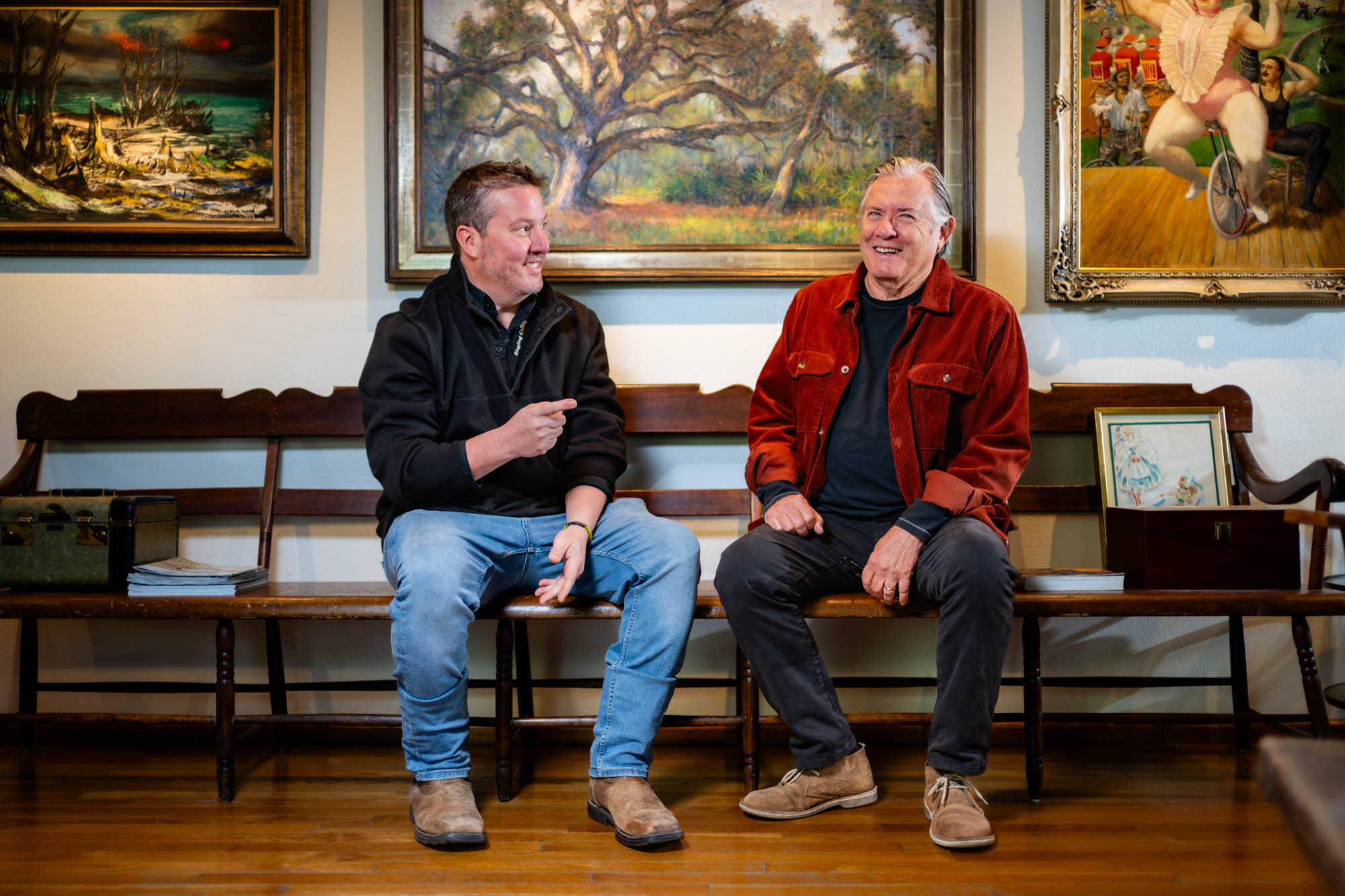
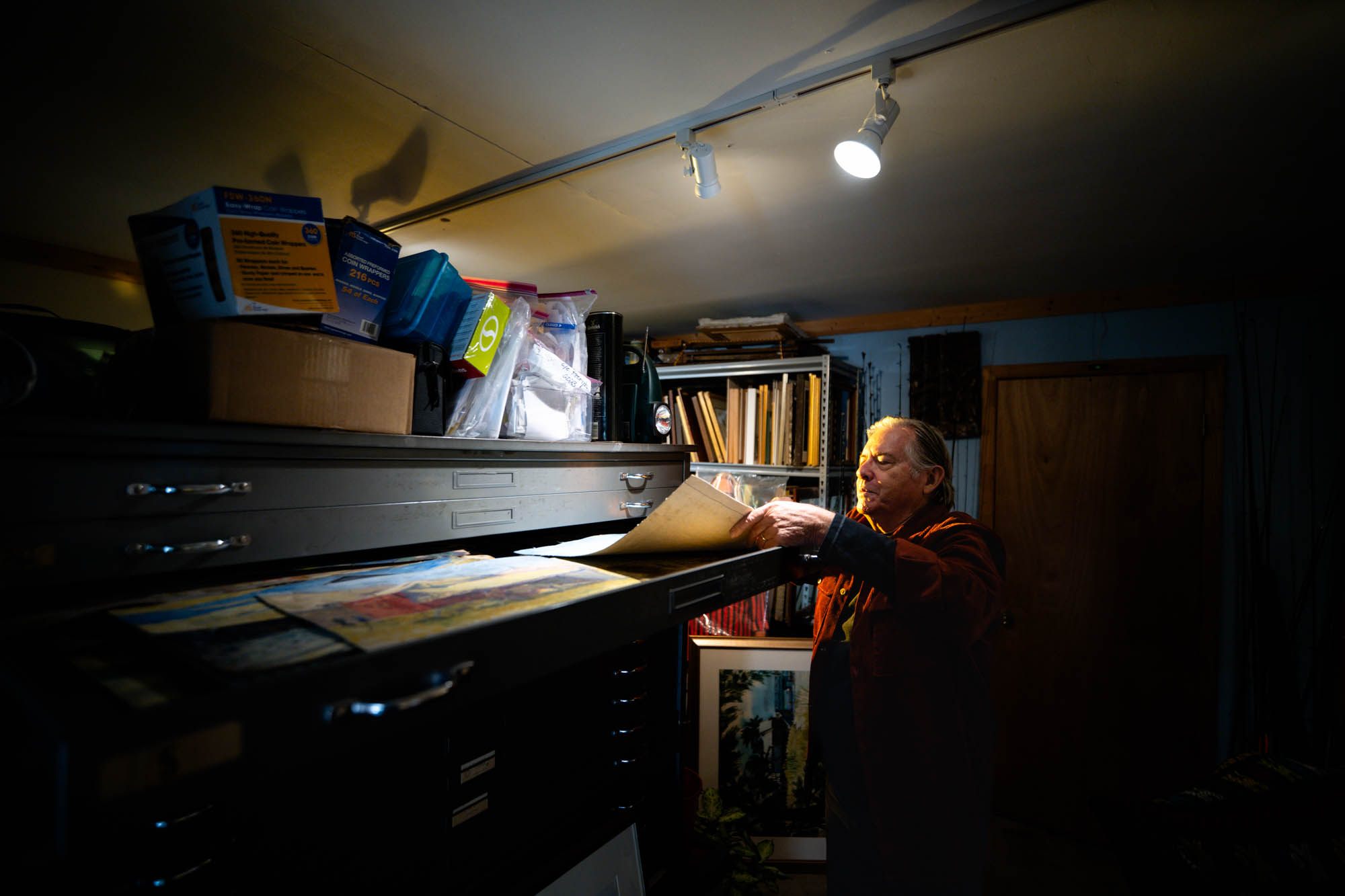
Despite garnering national recognition as an artistic destination in the 1950s, the era of the Sarasota Artist Colony is one that is oft-overlooked. It is a period of time that is crucial to the cultivation of Sarasota’s modern identity as Florida’s Cultural Coast, and yet, a simple Google search of “Sarasota Artist Colony” leaves one grasping at straws. Hartman and his co-curator Tim Jaeger, director of the Ringling College Galleries, created Origins in an effort to preserve and give credence to this piece of Sarasota’s past. “The message that we’re trying to convey is that something wonderful happened here and there is no firsthand memory of it any longer. What we have are the ephemera of it—the newspaper articles, the clippings, the photos, the paintings—and there are not many people that can even tell this story,” says Hartman. “If we don’t do it, who will? It’s not going to get any easier for people down the road.”
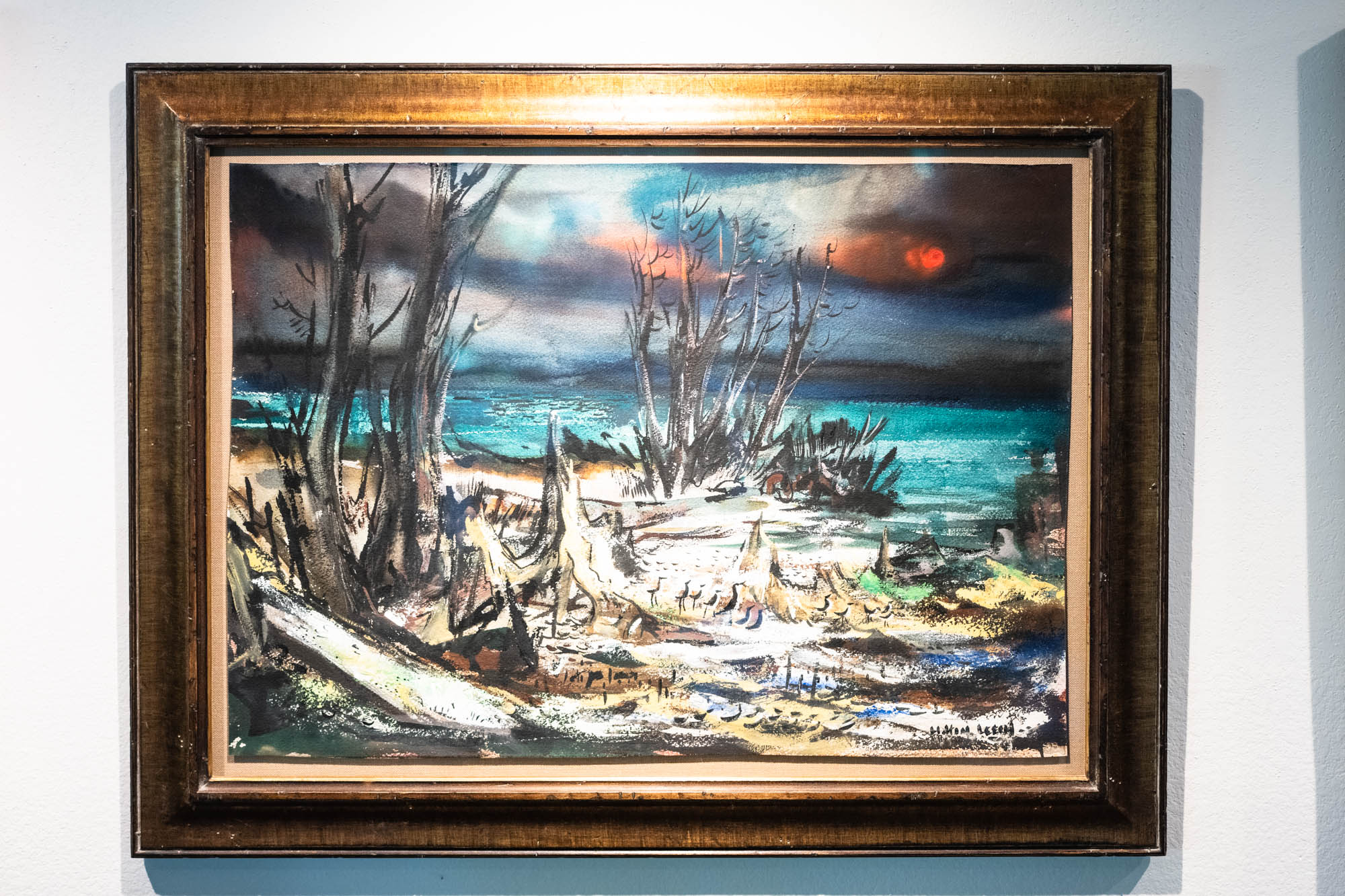
Origins will feature roughly 30 paintings, 20 of which are sourced from Hartman’s collection, from over two dozen artists. The subject matter of the paintings themselves, which range from plain air watercolor landscapes to oil portraits of circus performers and everything in between, harkens back to a less-developed era of Sarasota. Familiar landmarks like bridges, fields and beaches are transformed by the passage of time. “One thing I think a lot of viewers will find interesting is that when they look at these various scenes in Sarasota and then make the geographic connection, they’ll realize how much it’s changed,” says Jaeger. “This exhibition bridges the past with the present; it provides ideas about how our artistic heritage has informed our ongoing creative development.”
More than just a collection of paintings, Hartman and Jaeger plan to transform the exhibition space itself, creating a time capsule reminiscent of the Artist Colony’s era.
An LED wall will provide a video narrative of the time period, vintage photographs, newspaper clippings and other artifacts such as Christmas cards artists sent to one another will adorn the space. Everything in Origins is curated to present the collective nature of the movement, crediting not just a few painters, but the community of artists who brought forth John Ringling’s vision of Sarasota as a city rooted in the arts.
“People have this idea that history is created by big men, that you can point to this individual or that individual. They don’t realize that history is made by communities of like-minded people, which is what we’re trying to convey here,” says Hartman. “It’s terribly unfair to point to a specific few artists as the reasons this happened—it happened because about 1,500 people participated between the adult students who contributed to and bought paintings from the professional artists that made their careers here.”